Every December, when the Australian summer heats up, the Big Bash League (BBL) explodes with colour, sixes, and packed stadiums. You’ll see English stars like Sam Curran and Tom Curran, South Africans like Faf du Plessis, West Indian power-hitters like Andre Russell and Kieron Pollard, Afghan wizards like Rashid Khan and Mujeeb Ur Rahman, and even players from New Zealand, Sri Lanka, Bangladesh and Pakistan lighting up the tournament.
But one country is always missing from the team lists and that’s India. Not a single active Indian male cricketer has ever played in the Big Bash. Zero. Not Virat Kohli, not Rohit Sharma, not Jasprit Bumrah, not even a young gun from the IPL benches. This feels strange because India has the deepest T20 talent pool in the world and Indian fans love the Big Bash.
Why does this huge gap exist?
It’s not because Australian teams don’t want Indian players. Franchises would love to sign a Hardik Pandya or a Suryakumar Yadav in a heartbeat. It’s also not because Indian players aren’t good enough (that would be silly).
The reason is very simple. Its the BCCI’s Protecting Exclusivity. The Board of Control for Cricket in India (BCCI) does not allow its contracted (active) players to play in any overseas T20 league.
Read Also :- IPL Team with Most Foreign Players Featured in a Season
The rule has been in place for more than 15 years and it has never changed. Only when an Indian player retires from international cricket (or is no longer in the BCCI central contract list) can he play abroad.
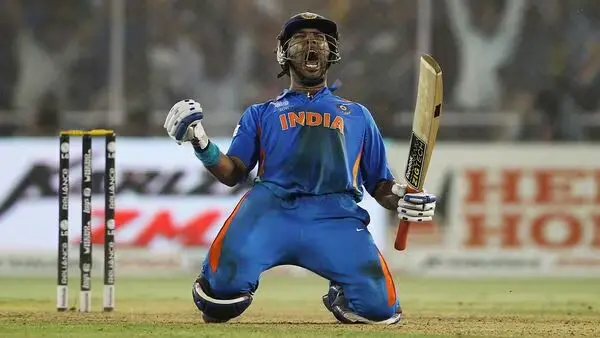
That’s why you sometimes see old stars like Harbhajan Singh, Yuvraj Singh or Suresh Raina turning up in the BBL after they have hung up their India boots. But as long as a player is available for India, the answer is always “no”.
IPL Monopoly: Why BCCI Says “No” to Foreign Leagues:
The major reason that BBCI won’t permit Indian players ton play at oversee T20 leagues is that board wants Indian Premier League (IPL) to Stay the Biggest and Richest. As IPL is the world’s richest and most famous T20 tournament. Millions of fans watch it, companies pay huge money to sponsor it, and TV channels pay billions for its rights.
The BCCI believes that if Indian superstars like Virat Kohli, Rohit Sharma, Jasprit Bumrah, etc., start playing regularly in the BBL or other leagues, some of the magic and money will go away from the IPL. Fans might start watching those leagues more, sponsors might shift, and the IPL would lose its “only place to watch the best Indians” tag.
So the BCCI treats its top players like exclusive property only available in the IPL, nowhere else.
The Domestic and National Calendar Collision:
Further the India’s Cricket Calendar Already stays Too Packed. December–February is when the BBL happens. That is also the main season for India’s biggest domestic tournament the Ranji Trophy (India’s version of first-class/state championship).
If top players skip Ranji to play BBL, the Ranji Trophy would become weak and boring. Young players would not get to play with or against the stars, and India’s strength in Test cricket (which depends a lot on Ranji) would suffer.
Plus, Indian players already play non-stop Tests, ODIs, T20Is, IPL, and domestic games. Adding BBL would mean more travel, more matches, and a higher chance of injuries. The BCCI says player fitness and national duty come first.
The ‘Retirement Only’ Loophole:
The only, and very narrow, path for an Indian player to feature in the BBL or any other foreign league is to officially announce retirement from all forms of Indian cricket including international, IPL, and domestic.
This is why the few Indians who have appeared in the BBL have done so only after severing all ties with the Indian system. Unmukt Chand, a former U-19 World Cup-winning captain, played for the Melbourne Renegades in the 2021-22 season, but only after announcing his retirement from Indian cricket and emigrating to the USA.
More recently, the of Sydney Thunder signed Ravichandran Ashwin as he announced his retirement from all format of Indian team. This requirement that a player must sacrifice any future role in the Indian cricket system is a substantial, life-altering decision that most active players are unwilling to make, especially given the high salaries and job security provided by the IPL.
The Financial Disparity: Lack of Incentive:
While players from Australia or the West Indies might look to the BBL for a financial top-up or steady work, the incentive for Indian cricketers is almost non-existent. A good BBL contract might pay ₹2–4 crore.
Many Indian players earn 10–20 times more just from the IPL and BCCI contracts, plus huge endorsement deals. So there is almost zero financial reason for an Indian player to beg the BCCI to let them play BBL.
The Rule That Killed the BBL Dream:
The BCCI has built the world’s most powerful and richest cricket system around the IPL. To protect that system and to keep the domestic structure strong, it simply says “No” to its active players playing in foreign leagues like the BBL.
Until the BCCI changes this rule there is no sign of seeing Virat Kohli in yellow for Perth Scorchers or Rohit Sharma in purple for Hobart Hurricanes. It will remain just a dream for cricket fans.